
Game Overview
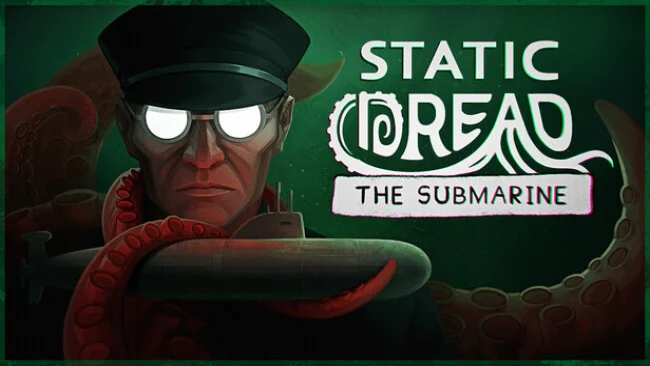
Far below the North Atlantic, a nuclear submarine becomes a sealed pressure cooker where military procedure collides with cosmic terror. Static Dread: The Submarine frames its horror through flickering instruments, failing communications, exhausted sailors, and the unnerving certainty that something ancient is moving outside the hull. The setting is less about jump scares than sustained dread: every corridor feels cramped, every sonar contact carries consequences, and the loss of surface contact turns a routine deployment into an apocalyptic nightmare. Its tone is cold, oppressive, and deliberately human, focusing on how ordinary crew members fracture when reality stops making sense.
You serve as the captain’s right hand, balancing operational needs against the mental and physical survival of the people under your command. Assign personnel to essential duties, preserve discipline, manage tense situations, and make decisions that can protect the mission while costing individual lives or sanity. Sonar acts as a major source of tension, since identifying shapes in the black water is never straightforward; a signal may indicate a vessel, a natural anomaly, or an impossible creature that does not obey any known rules. Progress comes through investigating the unfolding disaster and deciding which risks are worth taking as the submarine sinks deeper into isolation and paranoia.
What separates it from more action-heavy Lovecraftian games is its emphasis on command responsibility rather than firepower. The submarine is both workplace and prison, making crew relationships, conflicting priorities, and limited information central to the horror instead of mere background flavor. Its premise should appeal to players who enjoy the moral pressure of games such as The Darkest Dungeon or the claustrophobic survival tension of Barotrauma, but want a more narrative-driven descent into cosmic dread. Patient horror fans who appreciate reading situations, living with difficult calls, and fearing what they cannot clearly see are the ideal audience.
Screenshots
Installation
- Select the Download button at the top of this page to open UploadHaven.
- On UploadHaven, wait for any countdown, then select Free Download. Optional: UploadHaven Pro for faster downloads.
- When complete, extract the archive to a Static Dread: The Submarine folder using 7-Zip.
- Open the extracted folder and start the game normally.
- For errors, check Setup Guide & Troubleshooting below. Keep your security software enabled.
System Requirements
- OS: Windows OS
- Processor: Intel Core i3 or analogue
- Memory: 4 GB RAM
- Graphics: GeForce 1050 or analogue
- Storage: 3 GB available space
- Additional Notes:
Setup Guide & Troubleshooting
How do I fix missing DLL errors for Static Dread: The Submarine (v20260814)?
After extracting Static Dread: The Submarine (v20260814), navigate to the _Redist or _CommonRedist folder inside the game directory and install DirectX, Vcredist, and any other dependencies included.
What should I do if the downloaded file is corrupted?
The full archive is 918.98 MB — make sure your download completed fully before extracting. Use 7-Zip to extract the files. If you still see a "file corrupted" error, re-download and try again.
Do I need to run the game as administrator?
Usually, no. Start the game normally from the extracted folder. If you see a permissions or save error, check that the folder is writable and follow the game's documented fix. Only grant administrator access when a trusted game's specific setup requires it.
How do I update my GPU drivers for this game?
The game won't launch — what should I try?
Check that extraction completed and your PC meets the system requirements. Note any error message before choosing a fix. If it identifies a missing runtime, install the required DirectX components or Microsoft Visual C++ Redistributable from Microsoft.
My antivirus is blocking the game — is it safe?
A warning needs to be investigated; the download source alone cannot confirm that a file is safe. Keep your security software enabled and review the detection details. Do not run or restore a flagged file unless you have verified that it is a false positive. If you are unsure, leave it quarantined.